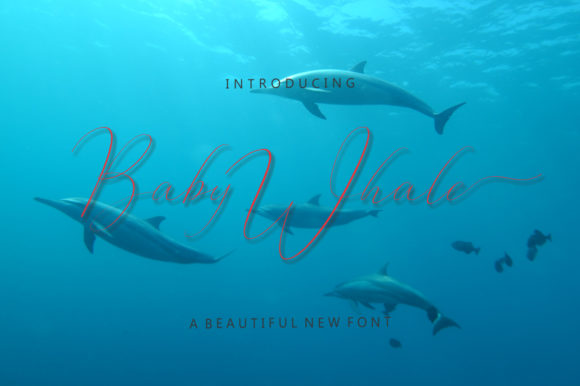
Baby Whale Font for Creative Projects
Working on a brand identity project recently, I found myself scrolling through my font library, searching for something that felt both unique and approachable. The client wanted a visual identity that felt personal, almost like a handwritten note from a friend. That’s when I stumbled upon Baby Whale, a sweet and delicate handwritten font that instantly caught my eye.
As a designer, I often look for fonts that can add character without overpowering the message. Baby Whale fits perfectly in that space. Its cursive style is fashionable yet understated, making it ideal for a range of design applications—from logos to packaging and social media graphics.
The Personality of Baby Whale
What stands out about Baby Whale is its softness. The strokes are gentle, with subtle variations that give it a handcrafted feel. It doesn’t scream attention, but it commands it in a quiet way. This makes it great for brands that want to feel warm and inviting, rather than bold and aggressive.
I tested it on a logo draft for a small café, and it worked surprisingly well. The font paired nicely with a simple sans serif for the tagline, creating a balanced contrast. It also looked good on a menu board mockup, where the cursive text added a touch of elegance without being hard to read.
Using Baby Whale in Branding
When working on a brand system, I always start with the basics—logo, color palette, typography. Baby Whale quickly became a key element in the typography section. It’s not meant for long paragraphs, but as a display or headline font, it shines.
I used it on a business card for a boutique skincare brand. The font gave the card a personal, artisanal feel that matched the brand’s values. It also worked well on product labels, where the cursive style made the text feel more authentic and trustworthy.
In digital spaces, Baby Whale added a nice touch to website headers and social media posts. It didn’t dominate the page, but it stood out enough to draw the eye. On Instagram, it was perfect for caption text, giving the content a friendly and expressive tone.
Design Considerations
One thing to keep in mind is that Baby Whale is best suited for short-form text. It works well as a logo font or accent typeface, but it’s not the best choice for body copy. That said, if you’re using it in a design where the text is minimal, like a poster or flyer, it can add a lot of visual interest.
I also noticed that the font has a few alternate characters and ligatures, which can be useful for creating a more customized look. Since it’s PUA encoded, accessing these features is straightforward, which is a big plus for designers who want flexibility.
Pairing Baby Whale with Other Fonts
Font pairing is an important part of any design project. For Baby Whale, I found that pairing it with a clean serif or sans serif font created a nice balance. A modern sans serif, for example, could serve as a strong counterpoint to the cursive style, making the overall design feel more cohesive.
If the project called for a more traditional feel, I might pair it with a classic serif font. But for a contemporary look, a minimalist sans serif worked better. The key is to let Baby Whale stand out without clashing with the other elements of the design.
Testing Before Finalizing
Before committing to a font for a full brand system, I always recommend testing it in different contexts. I printed out a few mockups, including a shop sign, label sticker, and homepage hero section, to see how Baby Whale performed in real-world scenarios.
It held up well in most cases, but I did notice that in some lighting conditions, the fine details of the letters could be harder to read. That’s why I suggest using it in larger sizes or as a secondary typeface rather than the main text.
Practical Tips for Designers
When working with Baby Whale, I found that keeping the design simple allowed the font to shine. Overcomplicating the layout with too many elements could make the cursive style feel lost. Less is more when it comes to this font.
Also, checking the font’s licensing is important, especially if you’re working on commercial projects. Baby Whale is a premium font, so making sure it’s properly licensed for the intended use is a must.
For clients, I often recommend using Baby Whale in specific areas of the brand system, like the logo or a key visual element. It adds a personal touch that can make a big difference in how the brand is perceived.
Overall, Baby Whale is a versatile and appealing font that can elevate a variety of design projects. Whether you’re working on a café branding, a skincare label, or a creative studio’s website, it’s worth considering for its charm and functionality.
As a designer, I’ve found that the right font can make all the difference. Baby Whale isn’t just another script font—it’s a tool that can help bring a brand’s personality to life in a meaningful way.